What Is Uveitis?
Uveitis is inflammation affecting the uvea — the middle layer of the eye that includes the iris (the coloured part), the ciliary body (which makes the fluid inside the eye and controls focusing), and the choroid (the rich blood-vessel layer beneath the retina). Inflammation may involve any or all of these, and often the adjacent retina and vitreous as well.
Doctors describe uveitis by where the inflammation is concentrated. Anterior uveitis affects the front of the eye and is the most common form. Intermediate uveitis involves the vitreous and the pars plana region. Posterior uveitis affects the choroid and retina, and panuveitis involves the whole eye. The location matters because it shapes both the likely causes and the treatment approach.
Symptoms vary by location but can include redness, aching or deep eye pain, light sensitivity, blurred vision, new floaters and, in some cases, only a gradual, painless reduction in vision. Importantly, chronic or recurrent uveitis can quietly damage the eye — raising pressure, clouding the lens or swelling the macula — even when it does not feel dramatic.
Why Finding the Cause Matters
Uveitis is not one disease but a pattern of inflammation with many possible causes. These are broadly divided into infectious (such as tuberculosis, toxoplasmosis, herpes-group viruses or syphilis — patterns vary by region and exposure) and non-infectious causes, which include autoimmune and inflammatory conditions affecting the body (for example, sarcoidosis, Behçet's disease, ankylosing spondylitis-related disease, juvenile idiopathic arthritis in children, and others).
Because some treatments (particularly steroids and immunosuppression) can worsen an infection, identifying or reasonably excluding infection before treatment is a core safety principle. Depending on your history, evaluation may include targeted blood tests, chest imaging, and occasionally sample testing from the eye. You may also be asked about joint pains, skin rashes, mouth ulcers, gut symptoms, infections, travel and medications — seemingly unrelated questions that often guide the search.
This is also where multidisciplinary care comes in: rheumatologists, physicians, paediatricians or infectious-disease specialists may join the team. Coordinated care is a strength of a structured uveitis practice, not a sign of confusion.
A Safety Warning About Steroid Drops
Steroid eye drops are powerful anti-inflammatory medicines and can be very effective — but they are prescription-only for a reason. Unsupervised steroid use can silently raise eye pressure (steroid-induced glaucoma), accelerate cataract, and can dramatically worsen undiagnosed infections such as herpetic or fungal disease. Equally, do not stop a steroid your clinician has prescribed abruptly without advice, because inflammation can rebound. Every dose decision belongs in the treating consultation.
How Uveitis Is Evaluated
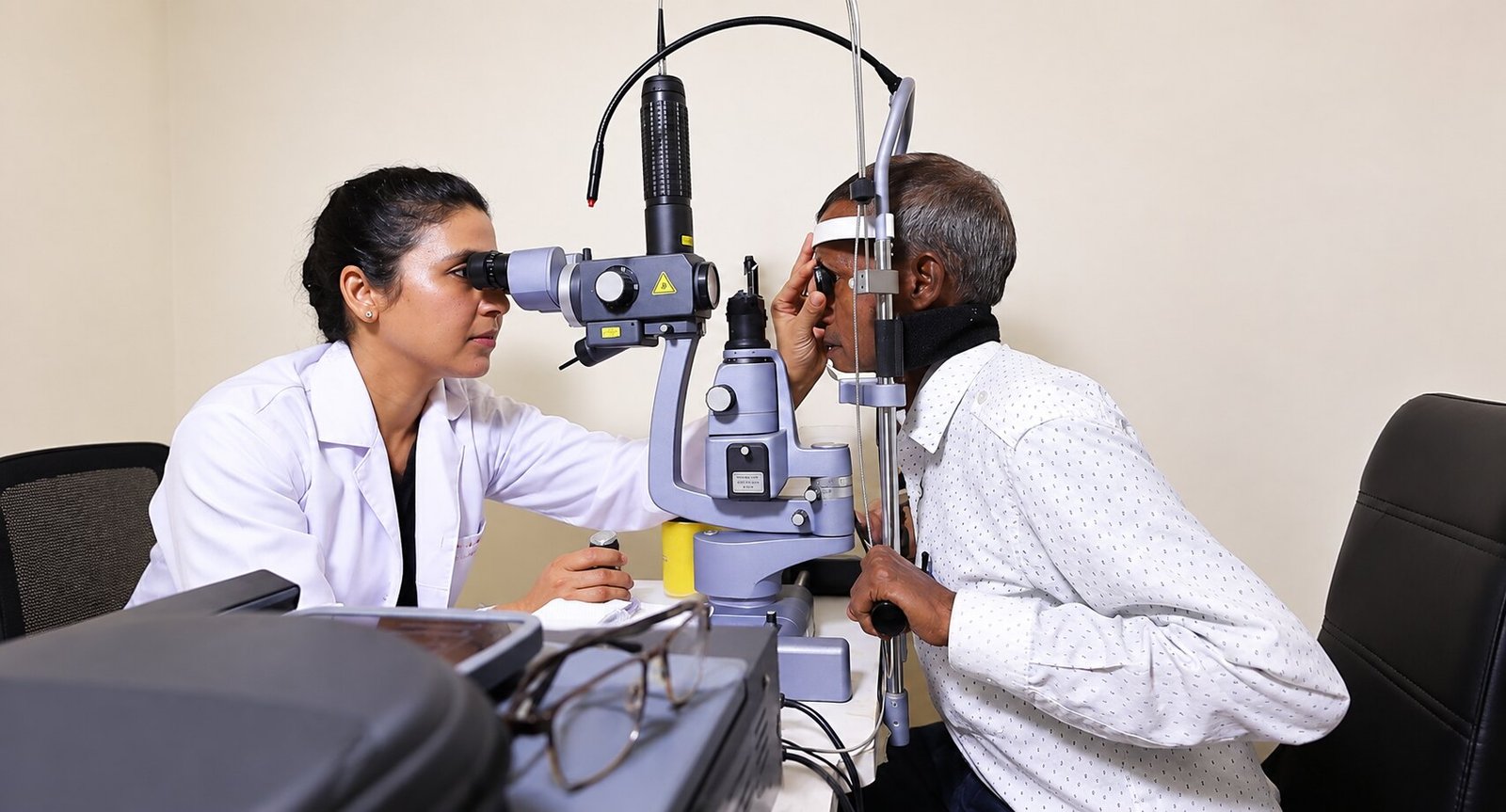
Evaluation combines a careful history, a structured slit-lamp and fundus examination, and selected investigations. Imaging often plays a central role: OCT checks the macula for swelling, fundus photography documents activity, fluorescein angiography maps leakage, and OCT-angiography or B-scan ultrasound add information in selected cases. Laser flare photometry, where available, helps grade anterior-chamber inflammation objectively.
Dr. Neha Mohan's approach emphasises explaining what is being looked for and why — so investigations feel purposeful rather than endless. Findings are reviewed together, and the working diagnosis is revisited as results return, because uveitis care is often iterative.
Treatment Categories and the Long-Term Plan
Treatment depends on the cause, location and severity:
- Infectious uveitis is treated against the specific organism, with anti-inflammatory care added carefully under supervision.
- Non-infectious anterior uveitis is commonly managed with prescription steroid drops and dilating drops, with dosing tapered strictly under review.
- Intermediate, posterior and panuveitis may need steroid injections or implants around or inside the eye, systemic steroids, or steroid-sparing immunosuppressive medication coordinated with a physician — chosen to protect the eye while limiting whole-body side effects.
- Complications such as macular oedema, glaucoma or cataract are treated in their own right, sometimes with surgery once inflammation is controlled.
Uveitis is often a long-term, relapsing condition. The practical goal is control: quieting inflammation quickly, preventing recurrences and complications, and tapering treatment safely. Honest follow-up — even when the eye feels fine — is part of the treatment, because subclinical inflammation can persist.
Common questions
Is uveitis contagious?
No. Uveitis itself is not contagious, though some of its infectious triggers are transmissible conditions. You cannot 'catch' uveitis from or give it to someone.
Can uveitis come back?
Yes, recurrence is common, particularly in certain anatomical types and associated systemic conditions. A planned follow-up schedule exists precisely to catch relapses early.
Why so many blood tests?
Each test probes a plausible cause (infection or autoimmune association). The list is individualised — not every patient needs every test — and results are discussed as they arrive.
Can I use over-the-counter redness drops?
Routine 'redness reliever' drops do not treat uveitis and can mask symptoms. Any eye drop for inflammation should come from your treating clinician.
Will uveitis affect my vision permanently?
With prompt control, many eyes recover well. Risk of lasting damage rises with delayed treatment, repeated flares and complications such as macular swelling — another reason follow-up matters.
Is uveitis linked to arthritis?
Several forms of uveitis associate with joint and spine conditions, and children with juvenile idiopathic arthritis can have silent eye inflammation. Rheumatology coordination is routine in these patterns.
Can I take painkillers for the eye ache?
Mild oral pain relief is generally reasonable, but the eye ache itself is a symptom to report — it may signal pressure rise or active inflammation needing treatment change.
How long does treatment last?
From weeks to years depending on the type. Anterior episodes may settle in weeks with tapering drops; chronic posterior disease may need sustained steroid-sparing therapy.
What is 'flare' on the eye scan?
Flare measures protein in the anterior chamber — a sign of active inflammation. It helps grade activity and guide tapering more objectively than symptoms alone.
When is it an emergency?
Severe pain with vomiting, rapidly dropping vision, a markedly red hard eye, or new flashes and floaters need same-day assessment rather than a routine appointment.