What Is Retinopathy of Prematurity?
Retinopathy of prematurity (ROP) is an eye condition that can affect babies born prematurely, because the blood vessels of the retina are still developing at birth and complete their growth during the final weeks of pregnancy. When a baby arrives early, this growth must continue outside the womb — sometimes in an environment the developing retina was not designed for.
In some babies, the developing retinal vessels grow in an abnormal pattern: they may stop short, leak, or trigger the growth of fragile new vessels with scar tissue. Untreated, severe ROP can pull the retina out of place or cause lasting damage to the developing visual system. With timely screening and treatment, the large majority of at-risk babies keep good vision — which is exactly why scheduled screening exists.
Which babies need screening, and when, depends on birth weight, gestational age and the baby's clinical course. Protocols are periodically updated, so your neonatal team will apply the current doctor-approved national guidance for your baby — this page deliberately does not hard-code thresholds.
How Screening Works — What Parents Can Expect
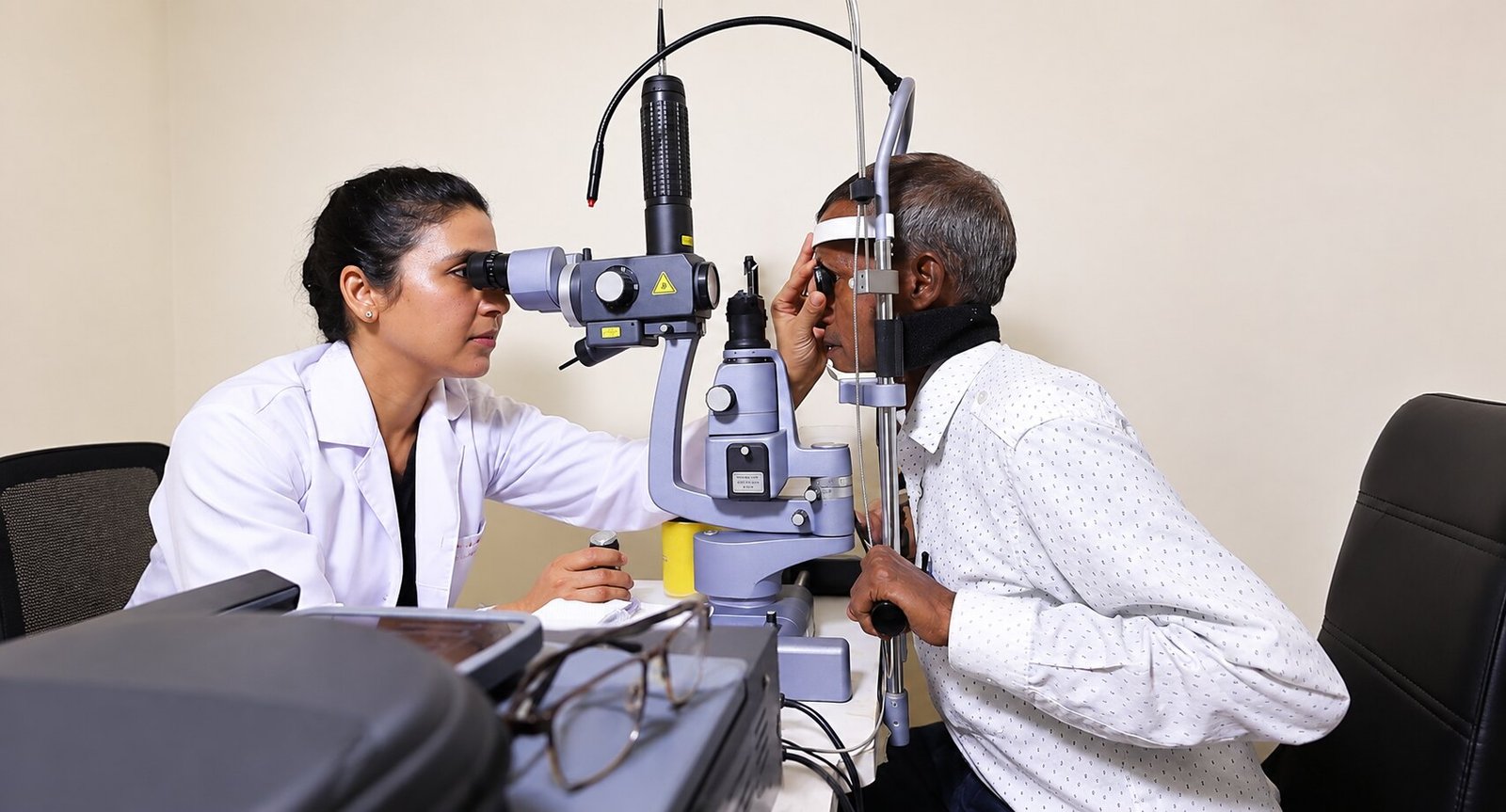
Screening is coordinated with the neonatal and paediatric team. An ophthalmologist examines the baby's retinas, typically with a specialised wide-view lens after gentle dilation — the examination is brief, and the team takes care to keep the baby comfortable and safe throughout.
Parents commonly ask whether the examination hurts. Babies may briefly dislike being held still and the bright light, but the examination itself is generally well tolerated, and the care team will tell you exactly how to prepare and comfort your baby. If treatment-requiring changes are found, options and timing are discussed with you immediately — ROP treatment, when needed, is time-sensitive, and delays matter.
Many babies are screened once or a few times and discharged from the programme. Others need serial examinations over weeks, and some need treatment followed by long-term follow-up. Each step is explained as you go.
Treatment, When It Is Needed
When ROP reaches treatment-relevant stages, options are discussed promptly. Depending on the stage, zone and plus disease, treatment may include laser therapy to the peripheral retina, or injections of medication into the eye in selected situations; advanced cases may need surgery. The choice depends on the examination findings, the baby's overall health, and current clinical guidance.
After treatment, follow-up continues — sometimes for years — because treated babies, and even some screened babies, benefit from periodic checks of vision development, glasses needs, and eye alignment. Your paediatric ophthalmology team will chart this with you.
For Parents: How to Hold This Season
A premature start is not anyone's fault. ROP screening is a routine protective step for certain babies, not a sign that something has gone wrong because of you. The most helpful things you can do are also the simplest: keep the scheduled examinations (timing genuinely matters), ask every question you have, and lean on the team — questions at 2 a.m. are normal in the NICU season.
This website deliberately avoids using identifiable photographs of premature babies; any imagery here is contextual or licensed, and no child's medical details are ever displayed.
Common questions
Which babies need ROP screening?
Babies born prematurely or at low birth weight, as advised by the neonatal team using current national protocol. Your doctors will tell you if and when your baby needs examination.
Does the screening examination hurt my baby?
It is brief and done with great care; babies typically object to being held and the bright light more than to any pain. The team will guide you on comforting your baby before and after.
What if ROP is found?
Treatment-requiring ROP is addressed promptly — often with laser, sometimes with injections, and in advanced cases surgery. Timing is critical, and the team will explain the plan for your baby specifically.
Will my baby need check-ups after NICU discharge?
Often, yes. Treated babies and some others benefit from periodic vision-development reviews. Your team will give you a clear follow-up schedule before discharge.
Can ROP come back after treatment?
Recurrence is possible, which is why follow-up continues even after successful treatment. Keeping every scheduled review is the safest approach.
Can ROP cause blindness?
Severe, untreated ROP can damage vision significantly — this is precisely why screening programmes exist. With timely screening and treatment, most at-risk babies retain useful, often good, vision.
Is ROP my fault as a parent?
No. Prematurity and ROP are medical circumstances, not parental failures. Screening and follow-through are the constructive focus.
Who performs the screening?
A trained ophthalmologist, in coordination with your neonatologist and paediatrician — often with the support of a retina specialist in treatment decisions.
Are there warning signs at home?
Home warning signs are limited because babies cannot report symptoms — scheduled screening is the safeguard. After discharge, report white pupils in photos, wobbling eyes, or obviously poor visual responses to your paediatric team.
Where can I read a plain-language guide?
See our Parent Guide to ROP and the ROP Screening Journey pages, written to be read calmly, one step at a time.