Understanding AMD
['\nAMD affects the macula with ageing. The dry form involves gradual thinning and drusen deposits; it usually progresses slowly and is managed with monitoring, lifestyle measures and nutritional discussion. The wet (neovascular) form involves abnormal, leaking vessels and can change vision quickly — it is treated urgently with intravitral anti-VEGF injections.
\nA home Amsler grid can supplement awareness: cover one eye, look at the central dot, and note distortion or missing areas. It is a supplementary tool, not a diagnosis — changes warrant prompt examination either way.
\n']Evaluation and Treatment
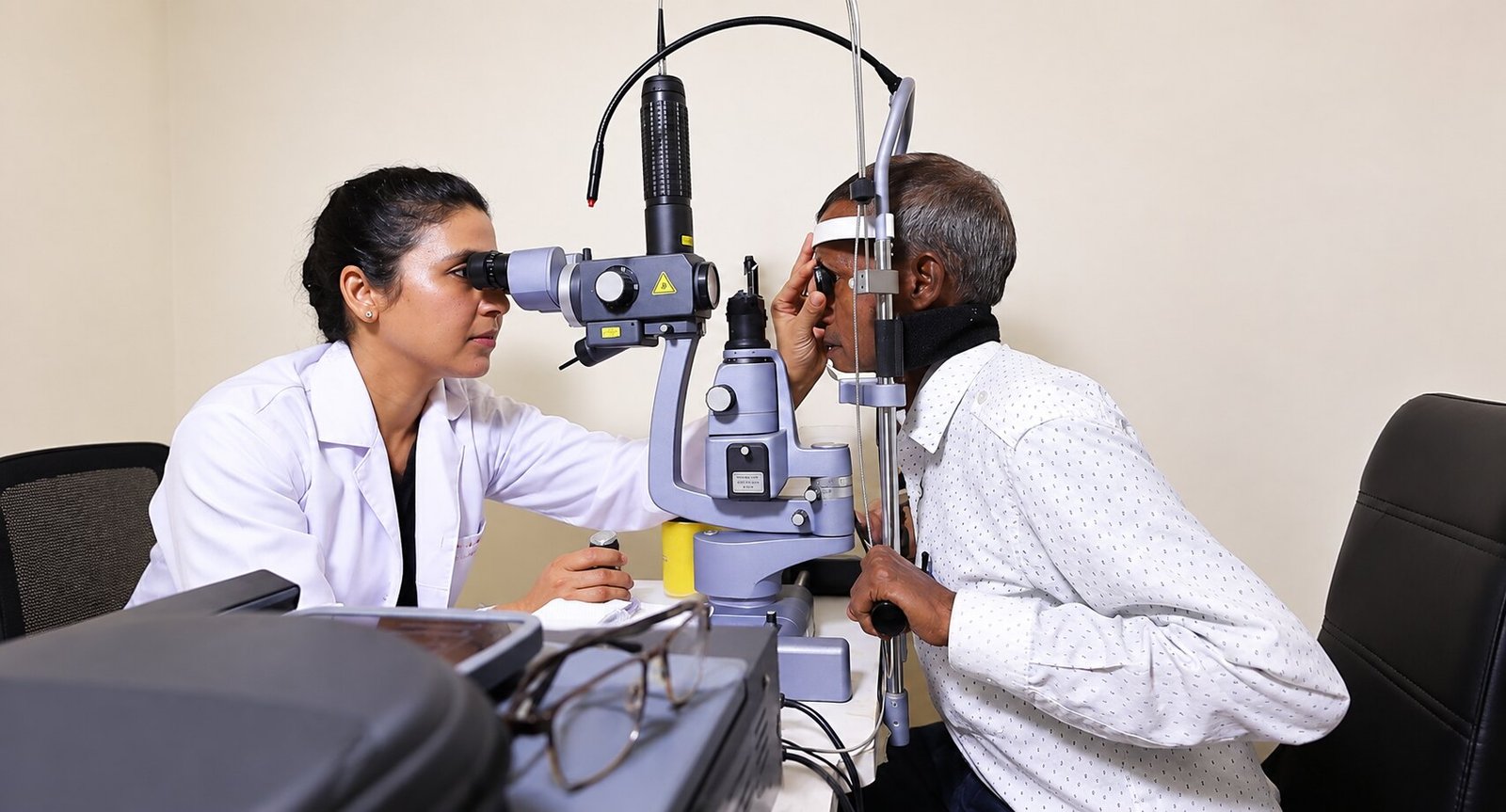
['\nExamination with OCT defines the type and activity. Wet AMD treatment follows the same disciplined course as other injection therapies: loading, then individualised review. Dry AMD care centres on follow-up cadence, smoking cessation, blood-pressure control and honest discussion of supplements as appropriate. Low-vision support is introduced early when useful — practical help, not defeat.
\n']Common questions
Can AMD cause complete blindness?
AMD affects central vision; total darkness is uncommon. Its real impact is on reading and faces — which is why early detection and wet-AMD treatment matter.
Is wet AMD curable?
It is treatable and controllable in most patients; the goal is drying the macula and preserving vision, usually with ongoing injections.
Do vitamins cure AMD?
Selected formulations slow progression in defined dry-AMD stages — they do not reverse disease. Suitability is a clinical discussion.
How fast does wet AMD progress?
Untreated, wet AMD can damage central vision within weeks — which is why distortion or a new central blur needs prompt review.
Does one eye being affected mean the other will be?
Risk is higher in the fellow eye, so it is monitored closely; early detection there changes outcomes.