Floaters, Flashes and the Vitreous
['\nThe vitreous gel filling the eye changes with age: it liquefies and separates from the retina (a posterior vitreous detachment). This is the single most common cause of new floaters and flashes, and in most eyes it is harmless. The clinical problem is that the same event can tear the retina — and a tear is the doorway to detachment. Symptoms alone cannot reliably separate the two, which is why a sudden increase in floaters, new flashes, or any shadow/curtain earns a prompt dilated retinal examination, ideally the same day.
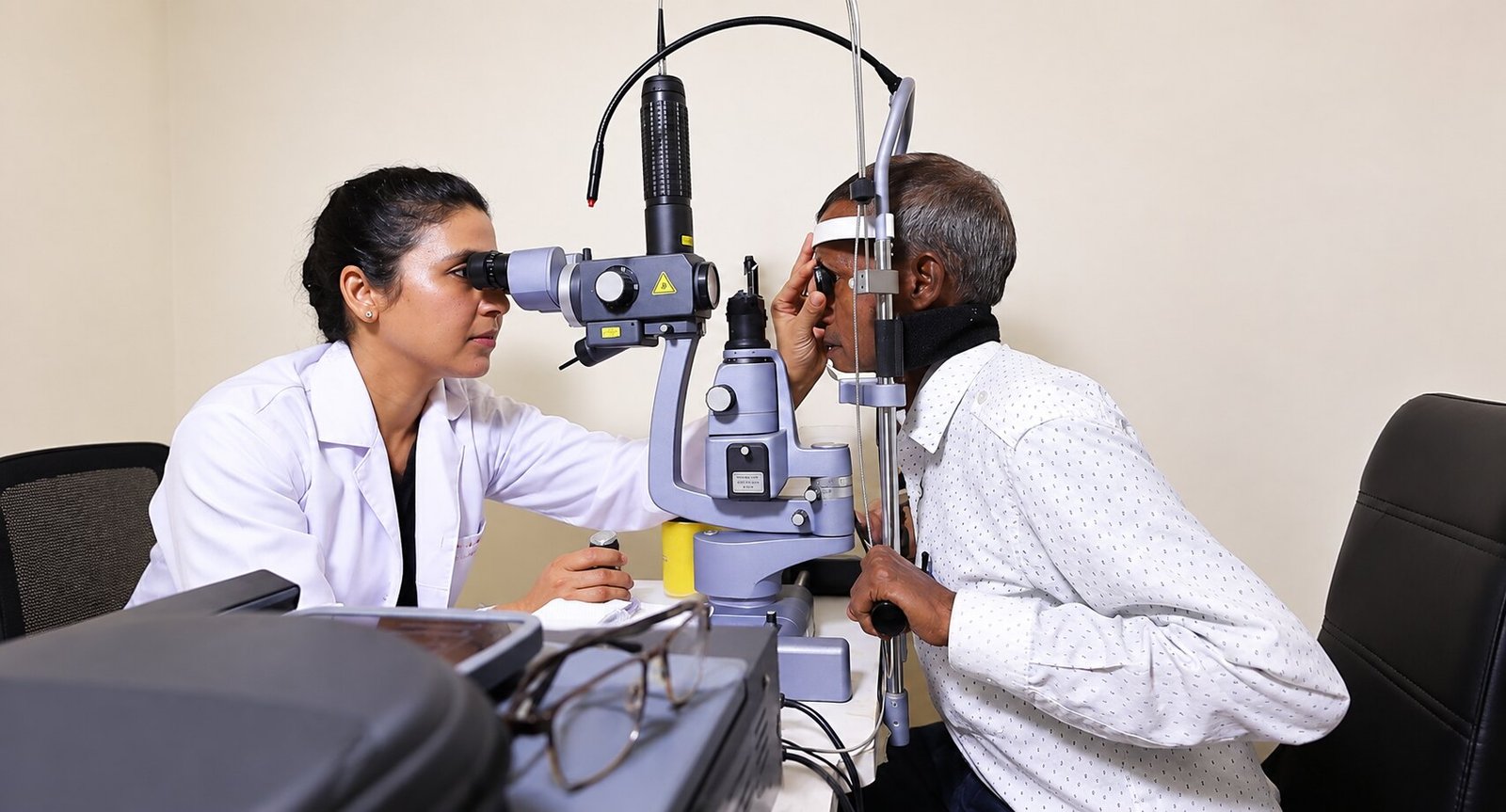
\nIf a tear is found before fluid passes behind the retina, a short outpatient laser retinopexy (or cryotherapy) welds the edges and dramatically reduces detachment risk. If examination shows a clean PVD, reassurance plus a clear "return if" list is the honest plan. Either answer requires looking — not guessing.
\n']Common questions
Are floaters ever normal?
Long-standing, slowly drifting floaters in both eyes are common and usually benign. A sudden shower of new ones is the pattern that needs examination.
Does every tear need laser?
Symptomatic, at-risk tears are typically sealed; some low-risk lesions are observed. The distinction is a clinical one made on examination.
Will flashes stop?
Flashes from vitreous traction often fade over weeks; new or increasing flashes warrant re-examination.
Can I check my own retina at home?
No home test or photograph replaces a dilated examination — the peripheral retina, where most tears occur, is not self-visible.
How quickly should I be seen?
Same day if possible for new symptoms; otherwise as urgently as the service allows. Do not wait for an online reply.