Why Longer Eyes Need Attention
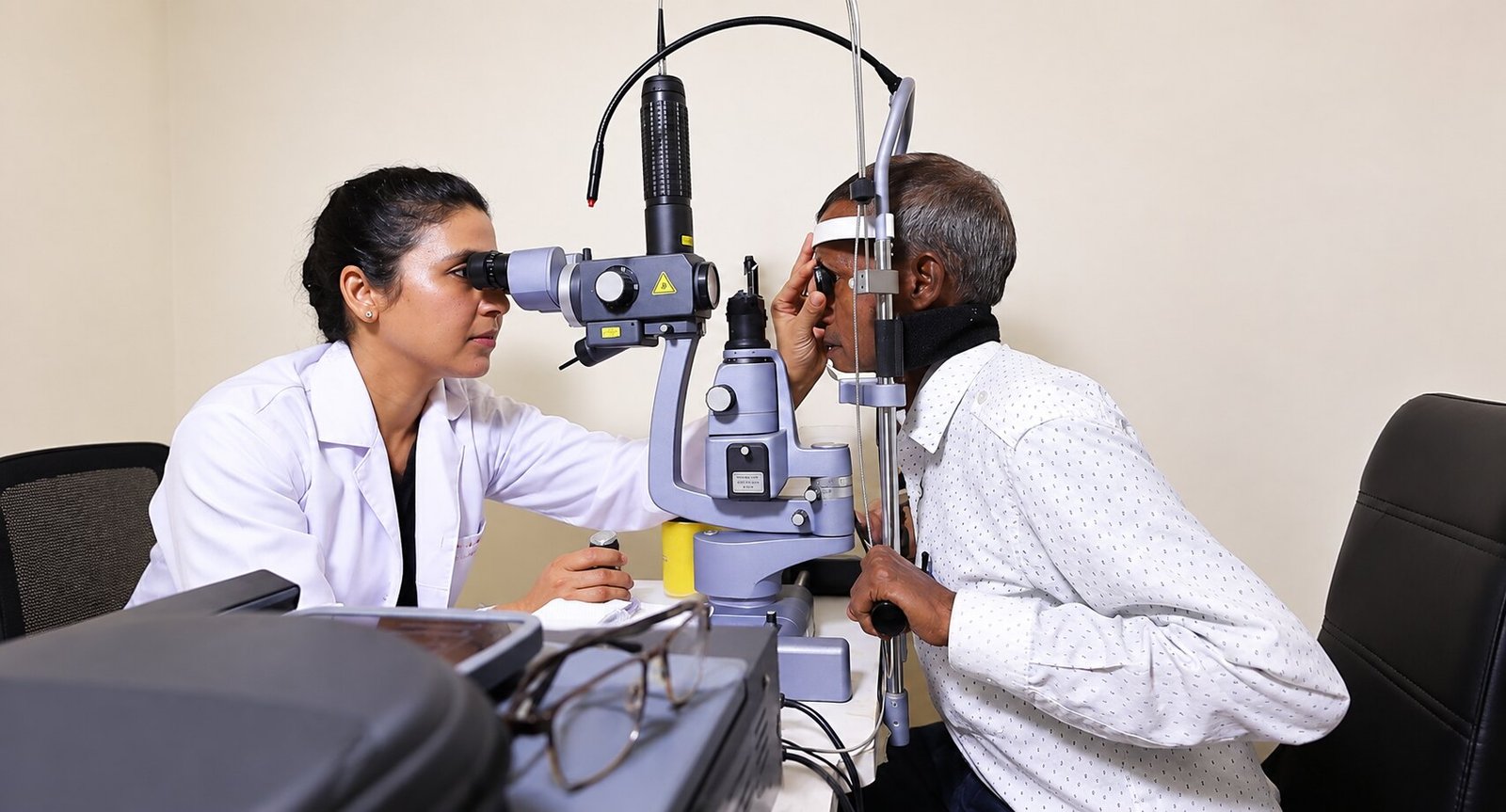
['\nIn high (pathologic) myopia, the elongated eyeball stretches the retina and choroid, raising lifetime risks of retinal tears and detachment, myopic macular degeneration (stretch-related atrophy, lacquer cracks, neovascular membranes), and earlier cataract and glaucoma. None of this is inevitable — but periodic dilated retinal examinations and prompt attention to symptoms are the standard of sensible care.
\nNew flashes, floaters or any curtain in a highly near-sighted eye deserves same-day examination, as does sudden central distortion or blur. Where myopic macular changes appear, modern imaging (OCT, OCT-A) defines treatable components such as membranes that respond to injections. The message is empowering, not alarming: know your eyes, keep your reviews, act quickly on change.
\n']Common questions
How often should highly myopic eyes be checked?
Individualised — commonly every one to two years without symptoms, sooner with new findings or symptoms. Your specialist sets the cadence.
Does LASIK remove retinal risk?
Refractive surgery changes the focusing power, not the eye's length or its retinal risks — dilated examinations remain necessary.
What is myopic macular degeneration?
Stretch-related damage to the central retina; selected membranes within it are treatable with injections, guided by OCT.
Are children with high myopia at risk too?
Pathologic changes are primarily adult phenomena, but young high myopes with symptoms still warrant examination.
Can I exercise or play sports?
Routine activity is fine for most; specific advice follows your retinal examination — ask at review.